
Cold emails often get a bad reputation for being ignored, but when crafted with the right emotional triggers, they can convert far better than average. Most cold emails see reply rates of just 1–5%, but highly personalized campaigns can reach up to 8.5%, according to aggregated industry data cited by Apollo Technical.
Think of emotional triggers as the “seasoning” in your outreach recipe. Just as a pinch of spice transforms a bland meal, the right psychological cues transform a cold email from overlooked to irresistible.
As a small business owner or marketer, understanding these triggers can help you cut through inbox clutter and start real conversations.

The 3 Emotional Triggers for Cold Email

Let’s break down the three emotional triggers.
1. Curiosity: The Hook
Humans are wired to seek closure. Subject lines that spark curiosity, Quick question about your growth strategy, invite the reader to open and engage.
Examples that worked:
- Still struggling with [pain point]?, empathy + curiosity.
- One tweak doubled conversions, want to see how?, intrigue + promise.
- Guess what your competitor is doing differently, competitive curiosity.
Best Practices:
- Use open‑ended questions.
- Hint at a benefit without revealing everything.
- Keep subject lines under 50 characters.
Analogy: Curiosity in emails is like a movie trailer, it doesn’t give away the whole story, but it makes you want to see more.
2. Urgency: The Push
Deadlines and scarcity drive action. Phrases like “Only 24 hours left” or “Spots are filling fast” push readers to respond before missing out.
Examples that worked:
- Last chance: 20% off ends tonight.
- We’re closing applications Friday, reply today to secure your spot.
- Only 3 seats left for tomorrow’s workshop.
Best Practices:
- Use urgency sparingly, too much feels manipulative.
- Tie urgency to genuine offers (limited seats, expiring discounts).
- Combine urgency with clarity: tell them exactly what to do next.
Analogy: Urgency is like a ticking clock in a game show, it forces quick decisions.
3. Reciprocity: The Give
When you give value first, a free resource, a tip, or a checklist, people feel compelled to reciprocate. This can be as simple as: “Here’s a free guide I thought you’d find useful. Let me know if it helps.”
Examples that worked:
- I noticed you’re hiring, here’s a free job description template.
- Here’s a checklist we use to onboard clients, feel free to adapt it.
- I recorded a 2‑minute video explaining [topic], reply if you’d like the full version.
Best Practices:
- Share something genuinely useful, not fluff.
- Make the resource easy to consume (one‑page checklist, short video).
- Position it as a gift, not bait.
Analogy: Reciprocity is like offering a sample at a bakery, once people taste, they’re more likely to buy.
Putting It All Together
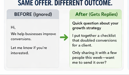
The most effective cold emails often combine these triggers. A subject line sparks curiosity, the body creates urgency, and the close offers value.
Example of a full email using all three triggers:
- Subject Line (Curiosity): Quick question about your growth strategy
- Body (Reciprocity): I’ve put together a free checklist that helped one of my clients double conversions. Thought you’d find it useful.
- Close (Urgency): I’m only sharing this with a handful of people this week, reply today if you’d like the full toolkit.
Key Takeaways
- Cold emails convert when they appeal to emotion, not just logic.
- Use curiosity to hook, urgency to push, and reciprocity to build trust.
- Personalization and emotional triggers can lift reply rates well above the industry average.